
By Cibik Law
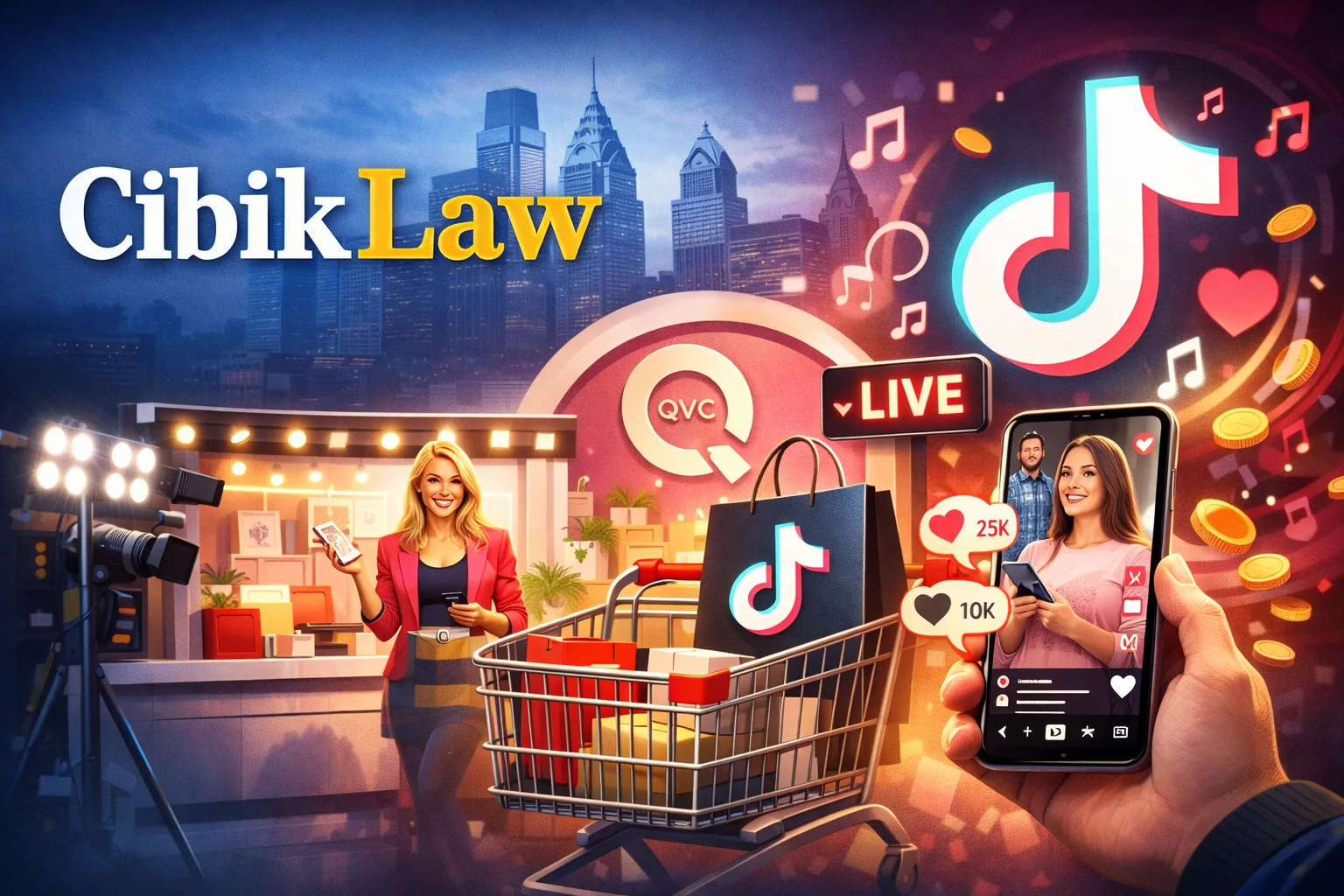
For decades, QVC was the gold standard for live product selling. It turned shopping into entertainment, built trust through charismatic hosts, and made impulse buying feel effortless. Today, TikTok Shop has taken that same formula and pushed it into a faster, more viral, and more scalable digital environment.
The result is one of the biggest shifts in modern retail: the rise of social commerce. TikTok Shop did not invent live selling, but it did repackage the QVC model for an audience that lives on short-form video, creator recommendations, and instant checkout. For brands, this creates opportunity. For retailers, it creates pressure. For lawyers and business owners, it creates real compliance risk.
QVC understood something powerful long before social media existed: people buy when they trust the person selling to them. The network’s hosts didn’t just present products. They demonstrated them, explained them, and created a sense of urgency that made viewers feel like they were missing out if they didn’t act quickly.
That model worked because it combined three ingredients: personality, repetition, and convenience. Viewers came to rely on familiar hosts, and those hosts became the face of the brand. When a product seemed useful and limited in availability, conversion rates followed naturally.
This approach was revolutionary in the television era. But it depended on scheduled programming, channel surfing, and a relatively narrow audience. Once consumer attention moved online, the model became easier to copy — and easier to improve.
TikTok Shop took the QVC playbook and gave it a digital engine. Instead of a television schedule, TikTok uses an algorithm. Instead of a handful of hosts, it has millions of creators. Instead of waiting for customers to call in, it lets them buy directly inside the app.
That shift is enormous because it removes friction at every stage of the buying journey. A viewer sees a video, trusts the creator, taps the product, and checks out without ever leaving the platform. The entire path from discovery to purchase can happen in seconds.
TikTok also adds something QVC never had: virality. A product no one has heard of can explode overnight if the right video catches fire. That makes TikTok Shop more than a sales channel — it is a discovery engine.
The biggest advantage TikTok Shop has over QVC is distribution. QVC had to earn attention through television reach and time slots. TikTok gets distribution from engagement, relevance, and sharing.
That means a small brand or creator can compete with much larger companies if the content resonates. A single product demo, beauty tutorial, or unboxing video can generate thousands of purchases with very little upfront media spend. That is especially powerful for lower-priced consumer goods, beauty products, fashion items, and impulse-buy categories.
TikTok Shop also turns every creator into a potential salesperson. In the old model, sales depended on a trained host. In the new model, the seller can be anyone with influence, credibility, and good content.
TikTok Shop is built on the creator economy, and that is what makes it so disruptive. Consumers often view creators as more authentic than traditional advertisers, even when those creators are being paid or earning commissions.
That perception of authenticity is valuable, but it also creates legal exposure. Brands need to know who is making claims about their products, whether disclosures are clear, and whether promotional content complies with advertising rules. If a creator makes false or misleading claims, the brand can still end up in the crosshairs.
For businesses using TikTok Shop, creator partnerships should not be treated casually. Contracts, disclosure requirements, usage rights, and compliance controls all matter. A viral sales campaign can become a regulatory problem if those pieces are not in place.
QVC is still operating, and it still has loyal customers. But culturally, it no longer dominates the way it once did. Younger consumers increasingly discover products through social media rather than cable television, and that shift has weakened QVC’s role as a shopping destination.
This does not mean QVC’s model failed. It means the model moved. TikTok Shop took the strengths of live selling — trust, urgency, entertainment, and convenience — and rebuilt them for the mobile era.
That is why TikTok Shop feels like QVC 2.0. It is faster, more interactive, and more tightly connected to how people already spend their time online.
For brands, TikTok Shop is both a growth opportunity and an operational test. A product can go viral quickly, but that kind of demand can overwhelm inventory, fulfillment, and customer service if the business is not ready.
To succeed, companies need more than good content. They need a real plan for logistics, compliance, and post-purchase support. Viral demand is only an advantage if the business can actually deliver on the promise.
Retailers also need to think carefully about brand control. On TikTok, a product may be presented by dozens of different creators in different ways. That creates reach, but it also creates inconsistency. Businesses should monitor how their products are being described and make sure the marketing message stays accurate.
TikTok Shop is a marketing platform, but it is also a commerce platform. That dual role creates legal complexity. The same content that sells products can also trigger scrutiny from regulators if it is deceptive, unsubstantiated, or improperly disclosed.
At Cibik Law, we see this as a key issue for modern businesses. Companies using TikTok Shop should pay attention to FTC disclosure rules, influencer agreements, product claim substantiation, refund policies, and consumer complaint handling. These are not optional details. They are part of doing business in the social commerce era.
The more powerful the sales channel becomes, the more important compliance becomes. Businesses that ignore that reality may enjoy short-term gains, but they also increase the chance of expensive mistakes.
TikTok Shop is not just replacing one retail format. It is helping define the future of e-commerce. Consumers increasingly expect shopping to feel entertaining, interactive, and immediate. That means content and commerce are no longer separate functions.
The brands that win will be the ones that understand both sides of that equation. They will create content that drives attention and build systems that can handle the resulting demand. They will also use legal guardrails to reduce risk before a campaign goes viral.
QVC once showed that shopping could be a form of entertainment. TikTok Shop has shown that entertainment can now be a form of shopping. That shift is bigger than any single platform.
TikTok Shop did not literally put QVC out of business, but it did take the business model QVC helped create and update it for a new generation. What used to happen on television now happens inside the social feed, powered by creators, algorithms, and instant checkout.
For businesses, this is a powerful opportunity. But it is also a reminder that new sales channels come with new responsibilities. The companies that treat TikTok Shop as both a growth engine and a legal risk will be the ones best positioned to thrive.


