
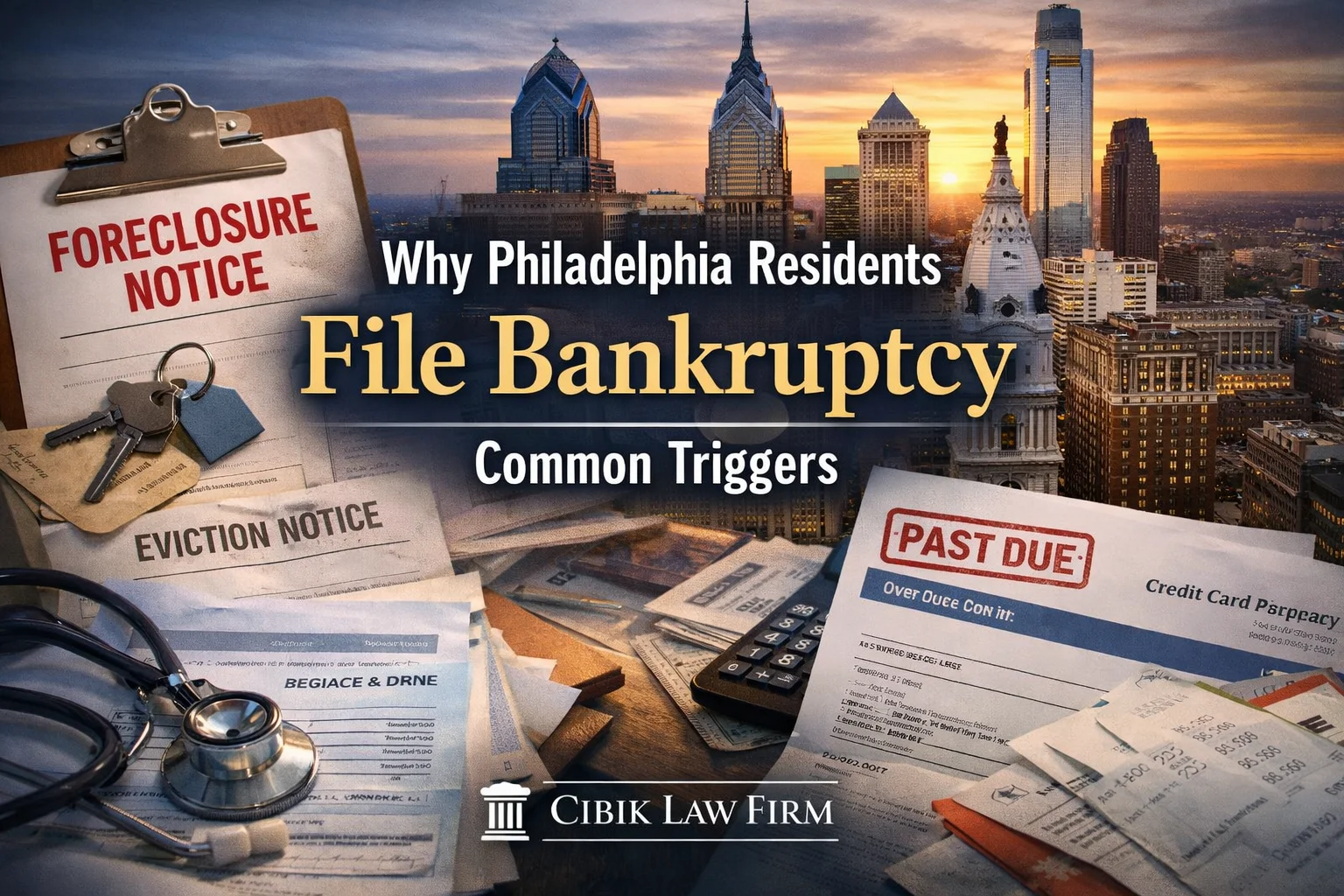
When financial pressure becomes overwhelming, many individuals and families begin searching for solutions that can help them regain control of their lives. One of the most powerful legal tools available is bankruptcy.
At Cibik Law Firm in Philadelphia, we regularly assist clients struggling with debt who are seeking a fresh financial start through Chapter 7 bankruptcy, Chapter 13 bankruptcy, and other debt relief solutions.
Learn more about bankruptcy services here:
https://philadelphiabankruptcylawyers.com/practice-area/bankruptcy/
Bankruptcy is not a decision people make lightly. It is often the result of multiple financial stressors stacking up over time until repayment becomes impossible. Below are the most common triggers that lead Philadelphia residents to file bankruptcy.
Understanding Bankruptcy in Philadelphia
Bankruptcy is a federal legal process that allows individuals or businesses to eliminate or restructure debt under court protection.
In Pennsylvania, the two most common consumer bankruptcy options include:
✔ Chapter 7 Bankruptcy (Liquidation)
Eliminates most unsecured debts such as credit cards, medical bills, and personal loans.
✔ Chapter 13 Bankruptcy (Repayment Plan)
Allows individuals with regular income to repay debts over 3–5 years while protecting assets.
Explore bankruptcy options here:
https://philadelphiabankruptcylawyers.com/practice-area/bankruptcy/
Medical bills remain one of the leading causes of bankruptcy in Philadelphia.
Even insured individuals often face:
A single medical emergency can quickly result in overwhelming debt. Bankruptcy can eliminate qualifying medical bills and stop collection actions.
Sudden unemployment or reduced income can quickly destabilize finances.
Common causes include:
Without income, debt accumulates quickly. Chapter 7 bankruptcy can provide a financial reset during unemployment.
Divorce often creates significant financial strain due to:
Bankruptcy can help eliminate unmanageable debt following separation and provide a financial reset.
Credit cards often become unmanageable when used for basic living expenses.
Contributing factors include:
Bankruptcy can eliminate unsecured credit card debt and stop compounding interest.
Housing costs in Philadelphia continue to rise, making mortgage payments difficult during financial hardship.
Common causes include:
Chapter 13 bankruptcy may help stop foreclosure and allow repayment of missed mortgage payments over time.
Many small business owners face personal liability for business-related debt.
Common issues include:
Bankruptcy can separate personal finances from failed business obligations.
While most student loans are not dischargeable, they still contribute heavily to financial stress.
Challenges include:
Bankruptcy may help by eliminating other debts and improving cash flow.
Unexpected expenses often trigger debt spirals, including:
Without savings, these expenses often lead to long-term financial strain.
Rising costs in Philadelphia have made it difficult for many households to stay financially stable.
Effects include:
When income does not keep up, bankruptcy may become necessary.
Although less common, financial mismanagement can include:
Bankruptcy may still provide relief along with financial counseling.
Court judgments can result in serious financial consequences, including:
Bankruptcy can stop these actions immediately through an automatic stay.
At Cibik Law Firm in Philadelphia, we provide experienced bankruptcy representation focused on real debt relief solutions.
We assist clients with:
Learn more here:
https://philadelphiabankruptcylawyers.com/practice-area/bankruptcy/
You should consider speaking with a bankruptcy attorney if:
Early legal advice can significantly improve your financial options.
Bankruptcy is not failure—it is a legal financial reset designed to help individuals regain control of their lives.
For many Philadelphia residents, it provides relief from overwhelming debt caused by medical bills, job loss, divorce, or rising living costs.
Speaking with an experienced bankruptcy attorney may be the first step toward lasting financial stability.


